


An interesting city tour exploring Barbara, starting from the imposing city walls.


A 15th-century hexagonal wall encircles the medieval village of Barbara, perched on the crest of a long ridge between the rivers Misa and Nevola.

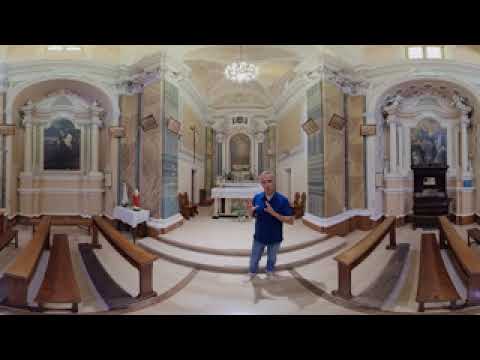
Rebuilt in 1694 in the Baroque style by Cardinal Carlo Barberini to replace an earlier place of worship, the Church of Santa Barbara houses a fine wooden sculpture of Saint Barbara dating from the late 15th century, a Madonna and Saints by Claudio Ridolfi, and other notable works of art.

It is the smallest square in the world, measuring three by four metres, but it is also a place of memories and emotions.
It is called Piazza Padella because of its shape, a space of twelve square metres accessed via a Lilliputian alleyway, which acts as the handle of this virtual frying pan situated in the heart of Barbara’s historic centre and, in its own small way, is also a place for socialising, thanks to the proximity of the houses.
The alleyway-handle of Piazza Padella opens up just a stone’s throw from the church. The municipality of Barbara has presented it as the smallest square in the world, and one has to believe it – it’s Guinness World Record material.

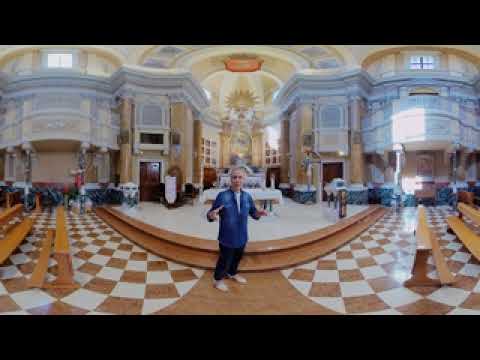
Built in 1787 at the behest of Cardinal Giovanni Francesco Albani to a design by the architect Francesco Ciarafoni, the Church of Santa Maria Assunta is a remarkable treasure trove of art, featuring a copy of Correggio’s *Nativity*—previously attributed to Domenichino—a *Saint Sebastian* by Paolo Gismondi, the Assumption by Giovanni Pirri, a Madonna and Saints by Pomarancio, and the Christ at the Column by Frances

Built in 1791 by Cardinal Giovanni Francesco Albani, it has an octagonal plan, symbolising the Resurrection (the seven days of Creation, with the eighth day representing eternity); the fountain, meanwhile, has three spouts and symbolises the Holy Trinity.

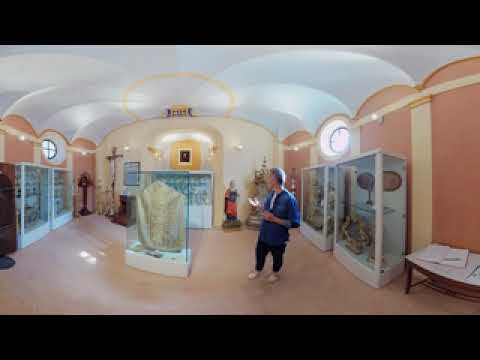
The Parish Museum of Santa Maria Assunta houses a valuable collection of ancient liturgical objects dating from the 15th to the 18th century.

A small Jewish quarter within the old town.

The site where the prisons and the old abattoir once stood


A drainage ditch (or, more commonly, a drainage or retention ditch) is designed to collect and channel rainwater or surface runoff, thereby preventing flooding and landslides. It plays a vital role in water management and soil protection.

Among the village's commercial activities, you can enjoy a pleasant stop dedicated to local flavors or the purchase of typical products. Recommended outlets include La Bottega del Pane, perfect for purchasing traditional baked goods, and Antichi Sapori, a small shop filled with local perfumes and specialties, ideal for bringing with you an authentic memory of Barbara.

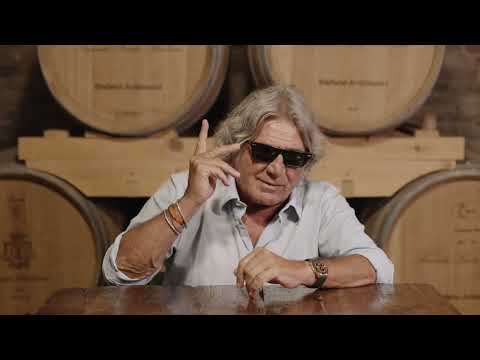
A must-see during or at the end of Barbara's itinerary is a stop at the renowned Santa Barbara Winery, a must-see for wine lovers. Here, you can taste renowned labels and purchase products that showcase the region through aromas, traditions, and quality, making the tour experience even more complete and memorable.
 PRICE
PRICE gratuito
A piedi
Easy






 Sea
Sea
 Villages and Castles

 Food
Food

 Cycling tourism
 Nature & Sport


